Why some people fly while other don't

Some people can fly but they have forgotten how to fly . So they forgot
Some people completely do not know they can fly . So they never learned
Some people have flew before, but forgot how to. so they never remember.
Some people know they can fly, but never try because they are surrounded with fear. So they quit
Some people wanted to see others fly before they fly. So they wait
Some people are waiting for a mentor to teach them how to fly. So they wait
Some people flew before and fell down. So they claimed that flying is dangerous and useless. So they whine and fret

Throw your Hat

Its very important to try out things and when the obstacles seem unsurmountable ,it is even more important to create situations that make you go for it. This is superbly narrated in the form of a story by Seth Levine: .

Two friends were walking together through some fields when they came to a high wall. The wall stretched as far as they could see in both directions. As they were talking about what to do in this impassable situation one of the men takes off his favorite felt hat and throws it over the wall. The other looks at him and says “why did you do that – that was your favorite hat,” to which his friend responds “now we’re going to have to find a way over that wall.”

Unleash creativity in a startup

Via: JotBlog
Jotspot has an event called hackathon which helps engineers in the firm become more creative.
It’s a day-long event where our engineers each crank on something:

  • valuable to the company

  • but not what they’re “supposed” to be working on and

  • that can be taken from idea to working prototype in one day

Results are stunning!

Doppelganger

Came across this word in seth’s post - was curious to know its origins :
**
Doppelganger :**
Meaning “double walker” a doppelganger is a shadow-self that accompanies every human. Only the owner of a doppelganger can see it, otherwise it is invisible to human eyes. Dogs and cats have been known to see doppelgangers. Providing sympathetic company, a doppelganger almost always stands behind a person, and they cast no reflection in a mirror. They are prepared to listen and give advice to humans, either implanting ideas in their heads, or a sort of osmosis. It is said to be bad luck if it is seen, and rarely a doppelganger will make itself visible to friends or family, often causing great confusion. Doppelgangers can be mischievous and malicious.

How Resilience works

Years ago, I was given an article by my classmate titled " How Resilience Works " . Though I had read it long time back, I could not relate to the article for many reasons. It was debunking the oft repeated quote from many a people who say " I am resilient “. Infact one does not know whether he is resilient or not, unless one goes through some hardship.

Quote for the day

Let not thy winged days be spent in vain,

for no amount of gold can bring them back

                                                                                    - Abdul Kalam ( President of India)

Fight the Bull

We do come across a lot of crap jargon in documents and ppts. Possibly we are also prey to that attitude of using jargon..Here’s a tool from Deloitte! which helps remove Bull from documents.
Link: Download Bullfighter .

The 10 great levelers

Thomas Friedman talks of 10 things that made the world flat:

1. Fall of the Berlin Wall The events of November 9, 1989, tilted the worldwide balance of power toward democracies and free markets.

2. Netscape IPO The August 9, 1995, offering sparked massive investment in fiber-optic cables.

3. Work flow software The rise of apps from PayPal to VPNs enabled faster, closer coordination among far-flung employees.

4. Open-sourcing Self-organizing communities, � la Linux, launched a collaborative revolution.

Secret to Success: Go for Just Enough

Link: HBS Working Knowledge

Maximization does not work as a measure of success What is the right measure of success in your eyes? What is it for your company or school? Is being really successful inevitably a matter of being the best, highest, youngest, richest, smartest, and prettiest on every scale you know—that is, celebrity winner-take-all? Such standards are maximized forms of accomplishment. Simply put, maximization is any form of going for the extreme—genius intelligence, superhuman effort, the best house, the unique lifestyle, and the most profit possible. Pick up any magazine and you can find a glamorized message of “making it” that assumes not only extreme performance but maximized reward: great wealth, drop dead attractiveness, all the attention, and possible omnipotence. What is the right measure of success in your eyes? Maximized measures begin to start counting success at the limits, only after you’ve gone further than most other people. This leaves individuals and organizations facing a very large territory of failure and a very small sweet spot in which they can actually feel they’ve won. And the spot changes with each new competitive achievement—moving targets. No wonder we’re stressed out. Maximized versions of success are more than superficial presentations. They have the power to co-opt our innermost standards of expectation, however insecure they may make us. Undoubtedly, goals calibrated to maximization have the power to inspire. “Be all that you can be” sounds more like a virtue than a vice. “Go further than humankind has ever gone.” Who would argue the opposite as a rule for success? But even if you are drawn to the positive aspects of maximization as your standard, most people’s sense of success demands high scores in many differing categories. Sometimes these goals contradict each other: Wealth and best friends who love you for yourself, not your money. A generous nature and being in the top position. Leading a team and being able to do everything your way. Not to mention being best at every activity of your life, from tennis to cooking to managing your portfolio. For this kind of mix, maximization will not work as an operating paradigm.

Cow 7: Software from Vending Machines

A vending machine that beams software to Palm organizers is a Purple Cow. It never runs out of inventory, it appeals to people with credit cards and with time and money to spare, and the profit margins are pretty good. 

EZ ZAP sells both commercial software and advertiser-supported freeware. You can find one at a local airport if you’re lucky. The freeware is a great way to get someone to try the machine in the first place, don’t you think?

E-Myth Revisited : Book Review

Emyth_1

I had read this book 6 months back, but I had to reread this, because I felt I had not learnt the essence of it in the first read. Now this by itself says a lot about the book.

E-Myth gives a classic insight in to the working of small companies and what it can possibly do to become a successful company.

What is E-Myth ? It is a fatal assumption of many an individual who start businesses. If you understand the technical work of a business, you understand the business that does the technical work.

Secret to Success: Go for Just Enough

Link: HBS Working Knowledge

Maximization does not work as a measure of success What is the right measure of success in your eyes? What is it for your company or school? Is being really successful inevitably a matter of being the best, highest, youngest, richest, smartest, and prettiest on every scale you know—that is, celebrity winner-take-all? Such standards are maximized forms of accomplishment. Simply put, maximization is any form of going for the extreme—genius intelligence, superhuman effort, the best house, the unique lifestyle, and the most profit possible. Pick up any magazine and you can find a glamorized message of “making it” that assumes not only extreme performance but maximized reward: great wealth, drop dead attractiveness, all the attention, and possible omnipotence. What is the right measure of success in your eyes?

Costs of Long tail Biz

Via Venture Blog :
What are the costs involved in the Long tail businesses:

1. Search Costs :It is not enough for a company to aggregate lots of small things. Reducing search costs by matching content to users is critical for Long Tail businesses.
2. Psychic Costs:These measure the stress of having to think about a transaction.The psychic cost of stressing over your minutes outweighs the extra money paid for an unlimited package, so long as the total costs are fairly low. This is one of the reasons microtransactions for content have not really taken off.

Doer Vs. Thinker

Anthony says what made him succeed :

I guess what I’m saying, is that it’s possibly just the person behind the business. Some people are born leaders, others are followers. I guess when followers attempt to become leaders, some succeed, some get by and some fail. A good leader will never truly fail, as if one approach doesn’t work, they will have another ready to use, and another and so on until adaptation is precise to succeed. I see this in people I know who run very successful multi million dollar businesses. They are doers, not sayers. They just get in and do what needs to be done, instead of sitting around talking about it and strategising the outcome. Did you know that none of the Fortune 100 CEO’s where tertiary educated when they succeeded? But there vice presidents and so forth were. See who the leader is vs. the follower. The doer vs. the thinker.

Email Sender Identity Spam : Fool proof solution

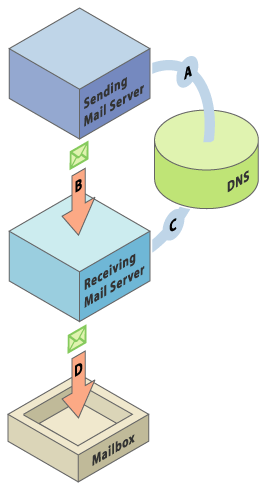
Yahoo, in its new service features has come up Domain Keys . Here’s how it works:

Gr_dkeys_1
There are two steps to signing an email with DomainKeys:

Sending Servers

  1. Set up: The domain owner (typically the team running the email systems within a company or service provider) generates a public/private key pair to use for signing all outgoing messages (multiple key pairs are allowed). The public key is published in DNS, and the private key is made available to their DomainKey-enabled outbound email servers. This is step “A” in the diagram to the right.
  2. Signing: When each email is sent by an authorized end-user within the domain, the DomainKey-enabled email system automatically uses the stored private key to generate a digital signature of the message. This signature is then pre-pended as a header to the email, and the email is sent on to the target recipient’s mail server. This is step “B” in the diagram to the right.

Receiving Servers

There are three steps to verifying a signed email:

Is Technology bad to the society

Look at this strange announcement in Ireland :
Announcement in Ireland

“Irish Archbishop Sean Brady recently declared that

    TVs and mobile phones should be switched off one day each week to help preserve Irish society… [as] the incessant noise of modern life was threatening to tear society to pieces.

    At a church service in County Kilkenny, Dr Brady said there needed to be a return to “a sound of silence”.

    Ireland had “lost its soul” and many people were experiencing “alienation from life itself”, said the Archbishop of Armagh.”

Item Tagging - Libraries

The item level tagging in RFID,though years away is starting to find its use in Library. These places would be a nice place to study the tech adoption
Link: Microchips keep Vatican library tidy .

“With the introduction of the so-called RF-ID (radio frequency identification) technology, that should rapidly become a thing of the past.

“You just walk in front of a shelf and you can immediately see on the screen a list of all the books and their contents,” Dr Piazzoni told the Italian news agency, Ansa. “If a book is missing, or in the wrong place, the computer signals the fact with an alarm sound.”

Mass Amateurization

Via  Clay Shirky:
Can someone make money by blogs? Clay Shirky in his article says that blogs essentially destroys the intrinsic and extrinsic values of Print Publishing.

Intrinsic  -
It takes  real work to publish anything  in print, and more work  to store,  ship, and  sell it.  Because the  up-front  costs are large,  and because  each  additional copy  generates some  additional cost, the  number of potential publishers is  limited to organizations prepared to support  these costs.  (These are barriers  to entry.) And since it’s  most efficient to  distribute those costs over  the widest possible audience, big publishers  will outperform little ones. (These are economies of scale.)  The cost of print insures that there will be a small number  of publishers, and of those, the big  ones will have a disproportionately large market share.

RFID in Retailing

RFID in retailing is one of the reasons for it being pushed in to mainstream. Players like Walmart and big retail chains are influencing the adoption of technology to a large extent.
The widespread adoption will depend on

  • Cost of tags , coming down from 20 cents to less than 5 cents

  • Establishment of Standards - Class 2 tags

  • Avoiding the Slap and ship approach and concentrating on Data Synch with the internal systems.

Social Calendar

Upcoming.org   , a firm on the lines of del.icio.us . The concept epitomizes a collaborative event calendar. It can also be a good alternative to meetup.com. Would be interesting to watch the progress of the site.

Successful Site in 36 Months

Stuntdubl:
SEO Strategy to make a site popular - a 2 year road map

  • Buy a new (better be extremely brandable) domain.

  • Build between 10 - 100 pages of good unique content

  • Get one high quality on theme link to the site after site is built

  • Site gets spidered

  • Spend a few days each month getting about a dozen links

Mass Amateurization

Via  Clay Shirky:
Can someone make money by blogs? Clay Shirky in his article says that blogs essentially destroys the intrinsic and extrinsic values of Print Publishing.

Intrinsic  -
It takes  real work to publish anything  in print, and more work  to store,  ship, and  sell it.  Because the  up-front  costs are large,  and because  each  additional copy  generates some  additional cost, the  number of potential publishers is  limited to organizations prepared to support  these costs.  (These are barriers  to entry.) And since it’s  most efficient to  distribute those costs over  the widest possible audience, big publishers  will outperform little ones. (These are economies of scale.)  The cost of print insures that there will be a small number  of publishers, and of those, the big  ones will have a disproportionately large market share.

Social Calendar

Upcoming.org   , a firm on the lines of del.icio.us . The concept epitomizes a collaborative event calendar. It can also be a good alternative to meetup.com. Would be interesting to watch the progress of the site.

Internet ad revenue makes a comeback

“U.S. Internet advertising surged 33% in 2004 to a record $9.6 billion, surpassing levels seen during the early Web boom – and it’s expected to grow at a similar rate in 2005, according to data released today.”

With Search space becoming more competitive by the emergence of vertical search apps, it is projected that ad revenue this year would be close to $12.6 billion. This is clearly a trend for more interactive advertising. Its also a good news for those who would want to revive some of the old dot com BModels which went bust because of the insufficient maturity of the online ad revenue model.

Cow 5: Holy Cow

99cows

Cow # 5 : Holy Cow

In this world where we see a lot of conformist behavior , is it not obvious that wierd stuff sells ?

That’s what Mike Dillon at Dillon Works does. He used to work for Disney as an Imagineer, and he started his company about seventeen years ago. He now has more than fifty employees in their own 30,000 sq. ft. building. Obviously, the key to succeeding in a business where you make anything is to really make anything. If it’s completely impossible, it’s likely someone will tell you that Mike can do it.
There are tons of people with the talent to make a running clam out of fiberglass. But only Mike, apparently, had the brains to see how unrisky it was

RBI's credit policy : 2005

The summary of Credit policy by Y V Reddy:

“The RBI could not have turned a blind eye to the rising inflation. Equally, it couldn’t have made moves that would permanently spook the markets and harden interest rates to a point where they put a brake on 7% plus GDP growth. So, Dr Reddy has chosen the soft, signalling option. By increasing the reverse repo rate (at which banks park their excess short term funds with the RBI) from 4.75% to 5%, he has indicated that the financial sector ought to be prepared for a possible hardening of interest rates. Equally, by leaving the bank rate unchanged at 6% and limiting the spread between the repo and the reverse repo rates at 1 percentage point, Dr Reddy has signalled that he doesn’t want to affect growth, and won’t apply a tight squeeze yet. Basically, what he has said goes thus: “Listen guys. I am just adjusting your pajamas a teeny-weeny bit. If inflationary pressures ease off, so will I. But if these intensify then expect me to start tightening the draw strings”.
    So that there aren’t too many skittish reactions, the RBI has also thrown in a fair amount of goodies. Indian companies can now invest up to 200% of their net worth in overseas JVs and subsidiaries — which is a doubling of the limit. Moreover, listed companies have now been allowed in repo transactions. While this may, at the margin, move some corporates away from liquid or money market mutual funds, it will create a wider and more diverse repo market, which is a good thing. Trading in gilts have been made easier. And banks have been allowed to approve proposals from their corporate customers for commodity hedging in international exchanges. "

Acquisition : Buffet speak

Interviewer: When you consider an acquisition, what are the first things you look for in a management team? Buffet: Well, what do you look for in a girl? Seriously, you look for the logical things - passion, an interest in running the business, honesty. Such as, do they love the business, or do they love the money? This is the first filter. I mean real passion; Mrs. B ran Nebraska Furniture Mart until she died at the age of 103 - that’s passion. If temperament is the most important personal asset in managing money, in business, it’s passion. Secondarily, if you’ve been doing it a while, you get to know how to do it. But obviously no management team is perfect, so you’re often stuck making a judgment call. You don’t want to wait forever to find the perfect team. Incidentally, a friend of mine spent twenty years looking for the perfect woman; unfortunately, when he found her he discovered that she was looking for the perfect man. Some main points spoken by Buffet during a graduation speech at an university: 1. “Stay within your circle of competence.” Clearly much of Mr. Buffett’s success has stemmed from his disciplined focus on investing in businesses that he understands and avoiding those that he doesn’t. He counseled us to ask questions constantly and never assume that we have achieved “expert” status in anything. 2. There’s still time for you to choose your own path; tell the truth and be independent. One of Mr. Buffett’s central messages was that success is dependent upon elective qualities, not something anyone is born with. He reminded us that we each get to choose whether or not we’re dependable, honest, and compassionate. 3. There’s no free lunch. With most things in life, those who work harder and think more clearly are ultimately rewarded. If you’re willing to roll the dice on a business or life decision, then you should be willing to accept a wider range of outcomes, including failure. 4. “The meaning of life is to do everything you can to make sure the people you care about love you back.”

Future of Music

Gerd Leonhard :
If one looks at the media business, there is certainly a great amount of change that is happening. It is expected to only increase further in the next decade.
Key directions as mentioned by Gerd Leonhard:

Exposure and Discovery leads to revenues: In this age of DIY music , there is a need for effectively bridging the consumers and media content providers. In this aspect,the grokster case will have a significant impact on the future direction

Moving to Typepad

I have been thinking of moving to typepad for the past 1 week . Finally I managed it today .Moved all my blogger entries to typepad. With some free time around the corner, I am hoping to increase my blogging entries for this month.

Semantic Web

In an interesting article by Paul Ford , the author takes us through a fictional journey where google becomes the most powerful company beating the amazons and ebays of the current world.
The way google moves away from its other players is the use of semantic web where the relationships between the vast information repositories around the world are going to play a critical role to synthesize knowledge.
The three powerful services of google’s strategy are spelt forth as

Signs of Prosumer

Alvin Toffler in his book “The Third wave”, talks about the rise of prosumer, the economic agent who is responsible for producing as well as consuming, as opposed to the consumer of the Industrial age. Current TV does seem to be the signs of that phenomenon in media, where the content is aggregated from a variety of people and distributed to large masses of people.
Mass media content suffers from a long list of drawbacks. Primarily , by nature it cannot target long tail. Current TV is a step towards appealing to the Long tail.
But why use TV, when there is net ?
FAQ on site says:
“There is definitely some cool stuff going on with Internet video, but probably not enough to power a media company like Current yet, and certainly not enough to deliver the quantity and quality of programming that we will offer. We’re going to do everything we can to sync up with those technologies, though, even as we continue with our cable and satellite TV network.”

Smart People and Dumb Ideas

Paul Graham   in an interesting article shares his notion about people and ideas. The primary point of discussion is why do smart people have dumb ideas?
The reasons for a dumb idea are :

Still life effect:You come up with a random idea, plunge into it, and then at each point (a day, a week, a month) feel you’ve put so much time into it that this must be the idea.How do we fix that? I don’t think we should discard plunging. Plunging into an idea is a good thing. The solution is at the other end: to realize that having invested time in something doesn’t make it

Acquisition : Buffet speak

Interviewer: When you consider an acquisition, what are the first things you look for in a management team?

Buffet: Well, what do you look for in a girl? Seriously, you look for the logical things - passion, an interest in running the business, honesty. Such as, do they love the business, or do they love the money? This is the first filter. I mean real passion; Mrs. B ran Nebraska Furniture Mart until she died at the age of 103 - that’s passion. If temperament is the most important personal asset in managing money, in business, it’s passion. Secondarily, if you’ve been doing it a while, you get to know how to do it. But obviously no management team is perfect, so you’re often stuck making a judgment call. You don’t want to wait forever to find the perfect team. Incidentally, a friend of mine spent twenty years looking for the perfect woman; unfortunately, when he found her he discovered that she was looking for the perfect man.

Cow 4: Its the only thing


Cow # 4: Its the only thing

An example of the importance of incorporating the marketing element in the service itself

“Coachville isn’t a product, it’s a movement. Thirty-two thousand people have joined over the past two years,making it one of the fastest-growing professional organizations . Founded by Thomas Leonard, a charismatic personal coach who recently passed away, Coachville is a group of people focused on helping each other make a living as coaches.
What’s remarkable? Coaching is an entire vocabulary. It’s a profession, a dogma, and it’s viral. Coaches spend a great deal of time selling strangers on the benefits of this new experience, which spreads the word. And many of the coached decide it would be fun to be a coach, so the word continues to spread. By building a central location for the movement, Leonard made it easy for coaches to talk to each other. By facilitating conversations (as opposed to just selling a product), Coachville was able to grow at precisely the time when most dot-coms shriveled. Do you see what’s going on here? The product is the marketing. If it weren’t, there wouldn’t be any coaches. The very act of creating the profession also created the marketing engine.”

High end outsourcing

When the outsourcing biz began to make waves in India, it was more or less argued that all said and done, only low level manual jobs will be outsourced to India. Look what’s new : Most of the Indian firms are doing high tech product design and development and let some other US clients slap their brand and market wherever they want. This is I guess what we call moving up the value chain. Worldwide spending on offshore research and development and engineering, for instance, will increase more than eightfold to $12 billion by 2010, according to Gartner. Similarly, spending on so-called infrastructure outsourcing–such as remote network management–will grow from less than $250 million to as much as $4 billion in the same. A great opportunity for Indian firms India , in a way has a great talent pool(82,000 engineering undergraduates a year, versus about 60,000 in the United States) at a cheaper rate($9,000 a year, and a senior engineer with eight years’ experience about $20,000) With companies like ,Wipro now have some 9,000 engineers designing products for about 100 companies, making it the world’s largest third-party R&D outsourcer, I guess the prediction that 10% of all IT work in US will come to India seems a possibility.

History of VisiCalc : Lessons from it

VisiCalc was the first commercially successful spreadsheet application in 1979. The developers behind this app were Dan Bricklin and Bob Frankston. How did all start: Like most of the successful products, the idea behind the product was the result of human frustation.The story is that Dan Bricklin was preparing a spread sheet analysis for a Harvard Business School “case study” report and had two alternatives: 1) do it by hand or 2) use a clumsy time-sharing mainframe program. Bricklin thought there must be a better way. He wanted a program where people could visualize the spreadsheet as they created it. His metaphor was “an electronic blackboard and electronic chalk in a classroom.” : He did not do major marketing analysis to figure out whether his app will have a potential.He had a need and went about developing it..Emphasizes the need of execution rather than analysis When did they decide to commercialize it ? During the fall of 1978, Daniel Fylstra, founding Associate Editor of Byte Magazine, joined Bricklin and Frankston in developing VisiCalc. Fylstra was also an MIT/HBS graduate. Fylstra was “marketing-oriented” and suggested that the product would be viable if it could run on an Apple micro-computer. Bricklin and Frankston formed Software Arts Corporation on January 2, 1979. In May 1979, Fylstra and his firm Personal Software (later renamed VisiCorp) began marketing “VisiCalc” with a teaser ad in Byte Magazine. The name “VisiCalc” is a compressed form of the phrase “visible calculator” :Team with a marketing personnel is a must. My personal experience also suggests the same. :Get a feel of what market might want.In this case, there was a hunch that people would prefer the app on Mac What came after VisiCalc?

Jittery - auction site with a difference

Here’s a new service which serves as an auction site…How are they even thinking of competing with ebay ? Jittery , upfront looks like (ebay-listing fees) + open communication between buyers and sellers + intelligent software facilitating market research(similar to amazon book recomm) + use of blogs to list items and quotes . It’s in beta..Watch out for this firm, for it will give a pulse on whether the market is ready to accept services which link blogs and auction.

Smart People and Dumb Ideas

Paul Graham   in an interesting article shares his notion about people and ideas. The primary point of discussion is why do smart people have dumb ideas?
The reasons for a dumb idea are :

Still life effect:You come up with a random idea, plunge into it, and then at each point (a day, a week, a month) feel you’ve put so much time into it that this must be the idea.How do we fix that? I don’t think we should discard plunging. Plunging into an idea is a good thing. The solution is at the other end: to realize that having invested time in something doesn’t make it

Software Infra for a startup

via evan :
Lots of cool web apps are now available that you can more or less run you company on.

  • Basecamp - project/task management

  • JotSpot - internal information management

  • Blogger - Blogging ofcourse

  • Gmail - E-Mail management

  • FogBugz - Awesome bug and customer email management

  • Textdrive ,- Subversion, email management, DNS management, and more – all with web front-ends.

  • Google Groups - internal and external mailing lists

  • Kayako - a really intersting customer support app. Haven’t decided how to use it yet or its relationship with FogBugz.

10 ways to raise a Purple Cow

Making and marketing something remarkable means asking new questions — and trying new practices. Here are 10 suggestions by Seth Godin 1. Differentiate your customers. Find the group that’s most profitable. Find the group that’s most likely to influence other customers. Figure out how to develop for, advertise to, or reward either group. Ignore the rest. Cater to the customers you would choose if you could choose your customers. 2. If you could pick one underserved niche to target (and to dominate), what would it be? Why not launch a product to compete with your own that does nothing but appeal to that market? 3. Create two teams: the inventors and the milkers. Put them in separate buildings. Hold a formal ceremony when you move a product from one group to the other. Celebrate them both, and rotate people around. 4. Do you have the email addresses of the 20% of your customer base that loves what you do? If not, start getting them. If you do, what could you make for them that would be superspecial? 5. Remarkable isn’t always about changing the biggest machine in your factory. It can be the way you answer the phone, launch a new brand, or price a revision to your software. Getting in the habit of doing the “unsafe” thing every time you have the opportunity is the best way to see what’s working and what’s not. 6. Explore the limits. What if you’re the cheapest, the fastest, the slowest, the hottest, the coldest, the easiest, the most efficient, the loudest, the most hated, the copycat, the outsider, the hardest, the oldest, the newest, or just the most! If there’s a limit, you should (must) test it. 7. Think small. One vestige of the TV-industrial complex is a need to think mass. If it doesn’t appeal to everyone, the thinking goes, it’s not worth it. No longer. Think of the smallest conceivable market and describe a product that overwhelms it with its remarkability. Go from there. 8. Find things that are “just not done” in your industry, and then go ahead and do them. For example, JetBlue Airways almost instituted a dress code — for its passengers! The company is still playing with the idea of giving a free airline ticket to the best-dressed person on the plane. A plastic surgeon could offer gift certificates. A book publisher could put a book on sale for a certain period of time. Stew Leonard’s took the strawberries out of the little green plastic cages and let the customers pick their own. Sales doubled. 9. Ask, “Why not?” Almost everything you don’t do has no good reason for it. Almost everything you don’t do is the result of fear or inertia or a historical lack of someone asking, “Why not?” 10. What would happen if you simply told the truth inside your company and to your customers?
Cow 3: Jingle Jingle Jingle

Cow # 3: Jingle Jingle Jingle

Who decides whether an idea is dumb or mind boggling..Actually it doesn’t matter what others think of it, if you think there is an opportunity in following up the idea, go ahead.

Look at Scott Schaible:
Scott Schaible’s wife is a light sleeper. So light that the jingling dog tags around his dog’s neck woke her up. Rather than getting rid of the dog (bad idea) or using duct tape (for the collar, not the dog!), Scott invented a tiny neoprene pet-tag holder that would silence the jingles. And that was the end of that.

High end outsourcing

When the outsourcing biz began to make waves in India, it was more or less argued that all said and done, only low level manual jobs will be outsourced to India.

Look what’s new :

Most of the Indian firms are doing high tech product design and development and let some other US clients slap their brand and market wherever they want. This is I guess what we call moving up the value chain.

History of VisiCalc : Lessons from it

VisiCalc was the first commercially successful spreadsheet application in 1979. The developers behind this app were Dan Bricklin and Bob Frankston.

How did all start: Like most of the successful products, the idea behind the product was the result of human frustation.The story is that Dan Bricklin was preparing a spread sheet analysis for a Harvard Business School “case study” report and had two alternatives: 1) do it by hand or 2) use a clumsy time-sharing mainframe program. Bricklin thought there must be a better way. He wanted a program where people could visualize the spreadsheet as they created it. His metaphor was “an electronic blackboard and electronic chalk in a classroom.”

He did not do major marketing analysis to figure out whether his app will have a potential.He had a need and went about developing it..Emphasizes the need of execution rather than analysis

Jittery - auction site with a difference

Here’s a new service which serves as an auction site…How are they even thinking of competing with ebay ?

Jittery , upfront looks like (ebay-listing fees) + open communication between buyers and sellers + intelligent software facilitating market research(similar to amazon book recomm) + use of blogs to list items and quotes .

It’s in beta..Watch out for this firm, for it will give a pulse on whether the market is ready to accept services which link blogs and auction.

10 ways to raise a Purple Cow

Making and marketing something remarkable means asking new questions — and trying new practices. Here are 10 suggestions by Seth Godin

1. Differentiate your customers. Find the group that’s most profitable. Find the group that’s most likely to influence other customers. Figure out how to develop for, advertise to, or reward either group. Ignore the rest. Cater to the customers you would choose if you could choose your customers.

2. If you could pick one underserved niche to target (and to dominate), what would it be? Why not launch a product to compete with your own that does nothing but appeal to that market?

Cow 2: Too Cool for you !

Cow # 2: Too Cool for you !

Who defines what cool is ? If you think there are products which are considered cool ,have already been serviced by a lot of big players, then is it not better to service the uncool ?

Here’s an example :

Fairly lousy locations, off the beaten business path. No signs readily visible from the street. Tiny rooms, small baths, austere lobbies. It’s so dark in one of them you can’t even read the newspaper.